
CARBONPATH · SCOPE 3 EMISSIONS FOR SHIPPING
Scope 3, counted.
Audit trail included.
Scope 3 is every tonne your suppliers, charterers and ship managers emit on your behalf — the part of the footprint that lives in other companies' systems. CarbonPath is the Scope 3 ledger for shipping: owners, managers and suppliers record value-chain activities in one application, emission factors turn them into tonnes under the GHG Protocol's methods, rules do the repetitive filing, and every change is logged for the auditor. In production since June 2024.
- June 2024In production since June 2024.
- Every partyOwners, managers and suppliers work in the same subscription.
- 3 methodsAll three GHG Protocol methods — spend-based, average-data, supplier-specific
- Audit trailEvery action, human or automated, is written to the activity's changelog.
The emissions you don't burn yourself are the ones you can't see.
Disclosure now covers the whole footprint.
Shipping accounted for nearly 3% of global human-caused CO₂ emissions in 2018, and regulators, lenders and investors have moved on from a company's own fuel to its value chain. A spend-based estimate still passes; the questions behind it are getting harder.
The data belongs to someone else.
A supplier's emission factor, a charterer's fuel figures, a manager's purchase ledger. Collected by email and attachment, it arrives late, in different units, with no trail back to the source.
Shipping is not a generic supply chain.
A vessel is leased in, leased out or owner-operated by the month, and the same purchase lands in a different Scope 3 category depending on the fixture. Generic carbon tools don't know what a fixture is.
One ledger of value-chain activities. Everything else follows from it.
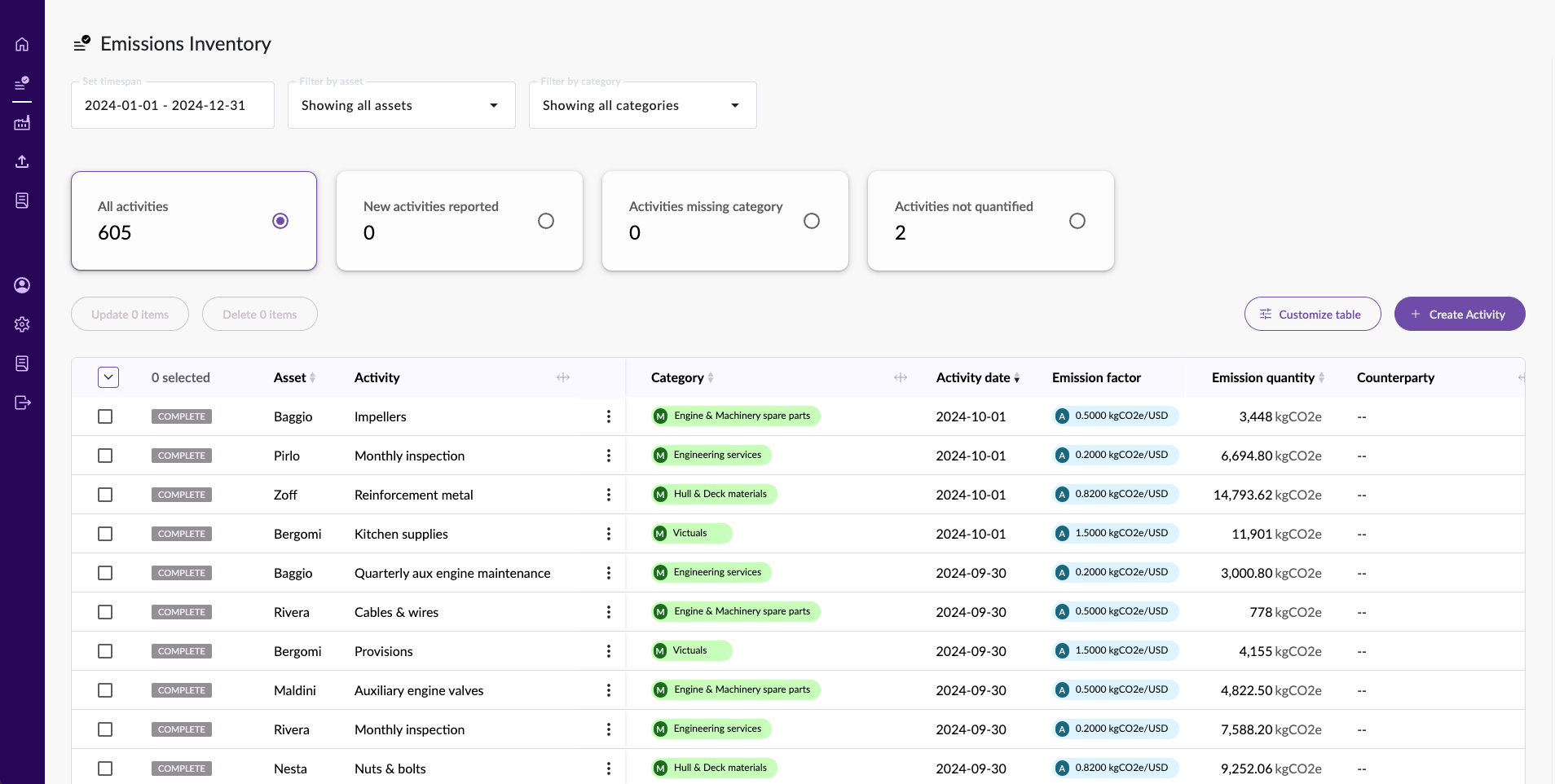
An activity is anything in the value chain that caused emissions: a drydocking, a lube-oil order, a month of fuel burned on a chartered vessel. CarbonPath holds every activity in one inventory, and four things happen to it there.
01 · It comes in.
Typed in, imported from an Excel or CSV export of the ERP or purchasing system, posted to the REST API, or pulled daily by an adapter — DNV Veracity Data Workbench for verified fuel emissions, fuel consumption and vessel positions.
02 · It gets a factor.
Your own emission factors, your supplier's, or a third-party provider's, searched and imported in place. All three GHG Protocol methods — spend-based, average-data, supplier-specific — so a figure can start coarse and improve as the supplier reports.
03 · It gets categorised.
The 15 Scope 3 categories plus your own sub-categories. The fixture schedule knows which vessels are leased in or out in which month, so a rule files the activity under category 8 or 13 without anyone looking it up.
04 · It adds up.
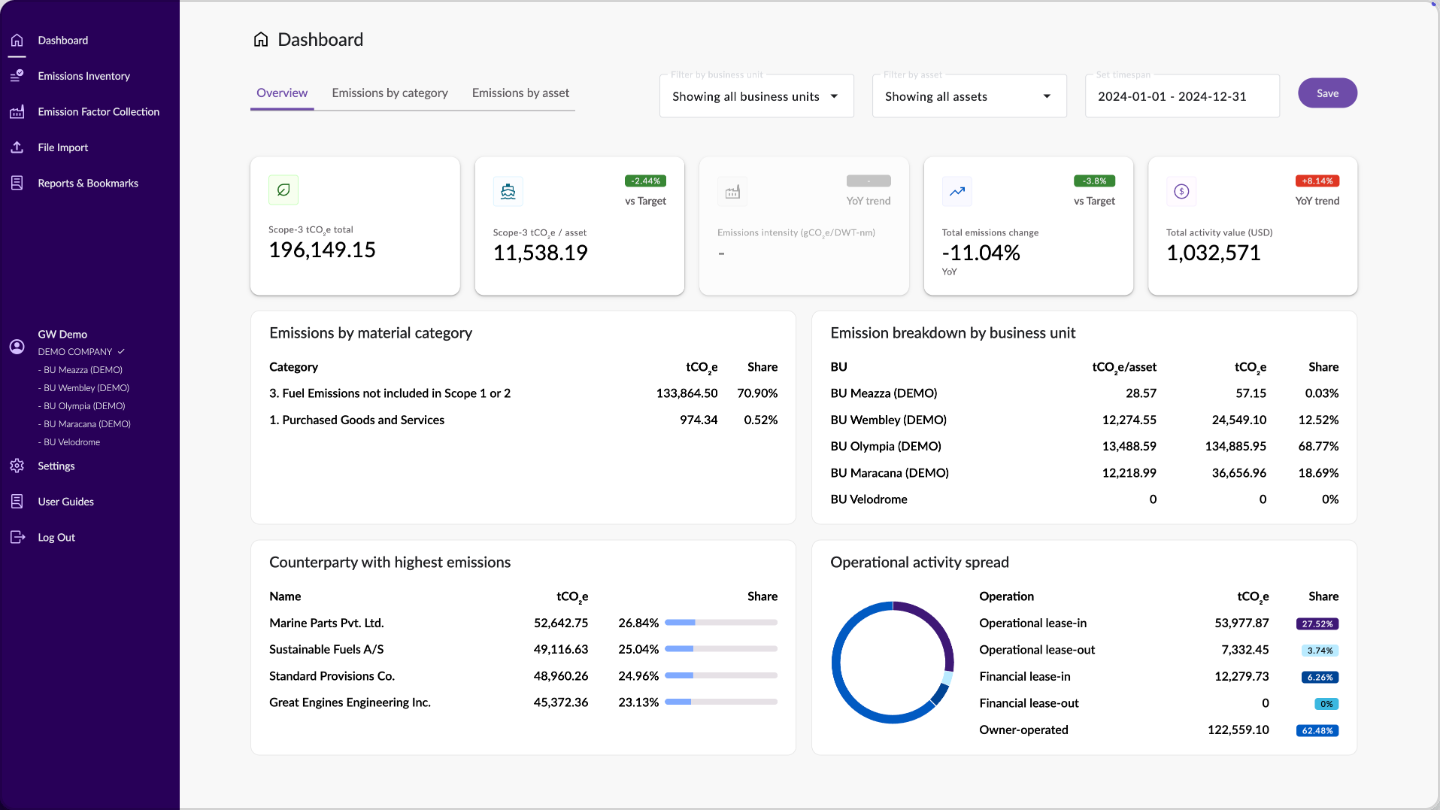
The dashboard totals the period and breaks it down by category, asset, business unit and counterparty, with the material categories tracked against targets. Freeze it as a report and the numbers never move again; download the Excel with every activity and factor inside.
Automation arrives one bounded step at a time — the discipline of The Six Levels of Autonomous Plant Operations (Arundo 2026), applied to a carbon ledger. Day 0 is an estimate from the data you have. Rules then take over the repetitive filing: a rule does only what you told it to, and runs retroactively when you change your mind. Since October 2025 a rule can also let an AI model pick the emission factor — reserved, by design, for the small activities that cannot move your total. Every action, human or automated, is written to the activity's changelog.
Designed around seven facts of the shipping business.
When CarbonPath was designed, seven facts of the shipping business came first, and the user experience was built around them.
One application, every party.
Owners, managers and suppliers work in the same subscription. A supplier reports its emissions where you read them, not in an attachment.
Traceability.
Configurable change logging on every activity, documents attached to emission factors, and policies and groups that decide who sees and edits what. The trail an external audit asks for is there before the audit is.
Fixtures, first class.
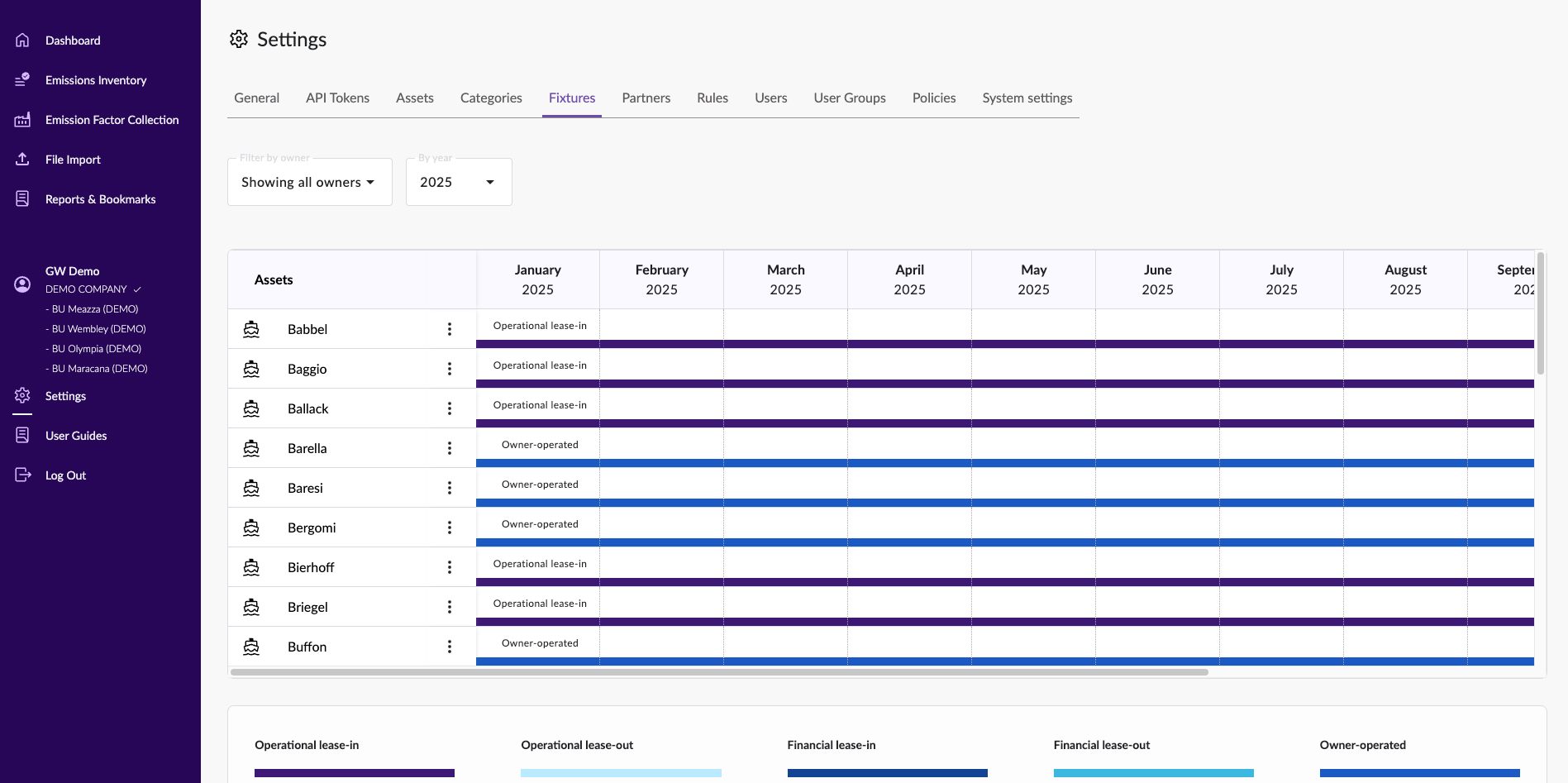
The fixture schedule records operational and financial lease-in, lease-out and owner-operated periods per vessel, and emissions follow the contract into the right category as the terms change.
GHG Protocol, all methods.
Spend-based, average-data and supplier-specific, with data-quality assessment and assurance of supplier-provided factors built in.
Data in, data out.
A documented REST API, pre-built adapters, file import with column mapping and a preview, and Excel reports that carry every activity and factor into your BI tools.
Automation you set the level of.
Start estimating on day 0 with the data you have. Add rules as your supply-chain data matures, and only where you want them.
Dashboards the compliance team owns.
Filters for business unit, asset and period; bookmarks for the views you return to; reports for the numbers you publish. Self-service, no ticket to IT.
Developed with the operator. In production since 2024.
CarbonPath was designed and built in collaboration with leading ship owners, released to selected partners in April 2024 and publicly in June 2024. It has shipped several releases a year since: the fixture schedule, the rules engine, single sign-on, the emission-factor collection, the DNV Veracity adapter, notifications, AI-selected factors.
"In the coming years, suppliers will likely find themselves competing not only on price and quality but also on Scope 3 emissions, requiring more collaboration among ship managers and suppliers than ever before. With Arundo's CarbonPath application, we are prepared to efficiently take action, focus on our goal of staying compliant, and manage our Scope 3 emissions seamlessly."
See it run.
Two views from the demo organisation: the fixture schedule that drives categorisation, and the emissions inventory where every activity lives.
The details, in writing.
Is CarbonPath for you?
Ship owners, ship managers and charterers who must report Scope 3, and the suppliers they report on. You start on day 0 with the data you already have: an export from the purchasing system is enough for a first estimate, and nothing waits on a data-migration project. Access is by subscription; we set up your organisation, business units and vessels with you, and tell you plainly what your data can and cannot support yet.