ENERGY OPTIMIZER · FOR ELECTRICITY-INTENSIVE PROCESSES
Run when power is cheap.
Stop paying for when it isn't.
For electrolysis and other processes where electricity is the dominant cost, the Energy Optimizer plans your load against forecast spot prices — producing what you need at the lowest possible cost, or more when it pays. Up to 15% off the energy bill, and a smaller carbon footprint, from the same equipment you run today.
- Up to 15%Up to 15% off the energy bill, and a smaller carbon footprint, from the same equipment you run today.
- €8M a yeara running deployment is delivering €8M a year in lower cost of goods sold from production planned across sites and energy markets.
- Double-digit millionschlor-alkali plants in the European power market can realize annual savings in the double-digit millions of euros by modulating load with the Energy Optimizer
- Level 2the plan is computed when your planners ask for it; they approve it before it runs.
The price of power is now a production variable.
Electricity spot prices have become both higher and far more volatile — and for any manufacturer whose process runs on grid power, that volatility is either a cost you absorb or a margin you capture. Capturing it means treating the power price as an input to production planning, not a line in the finance report:
Buy less when it's expensive.
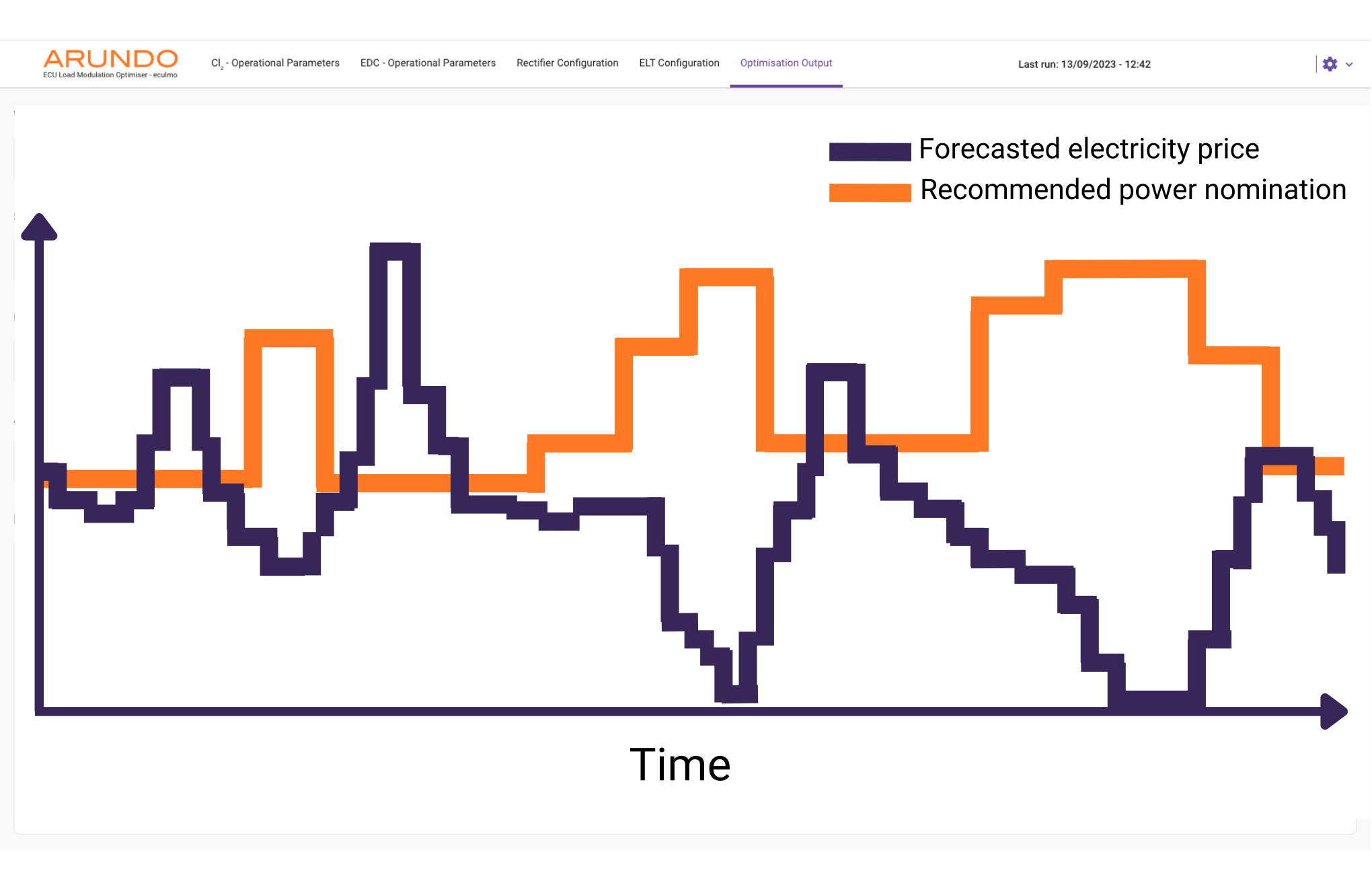
Plan load around forecast spot prices, so the same daily output is produced in the cheapest hours.
Sell when it's worth more.
Fixed-price contracts with sell-back clauses turn a high-price hour into revenue.
Cut emissions without cutting output.
Peak-hour power is the dirtiest power in most grids; shifting load off the peak lowers your footprint and helps the grid stay stable.
Built for processes where power is the cost.
A process is a candidate when three things are true: it runs on electricity bought from the grid, its load can be modulated without upsetting the process, and power is a dominant share of production cost. That describes:
- Water electrolysis for hydrogen (including hydrogen as a feedstock for green ammonia)
- The chlor-alkali process — chlorine and caustic soda
- Aluminium electrolysis, where potlines are retrofitted for thermal stability
- Silicon smelting
- Electric-arc steelmaking
- Pulp and paper
Load modulation, planned by the hour.
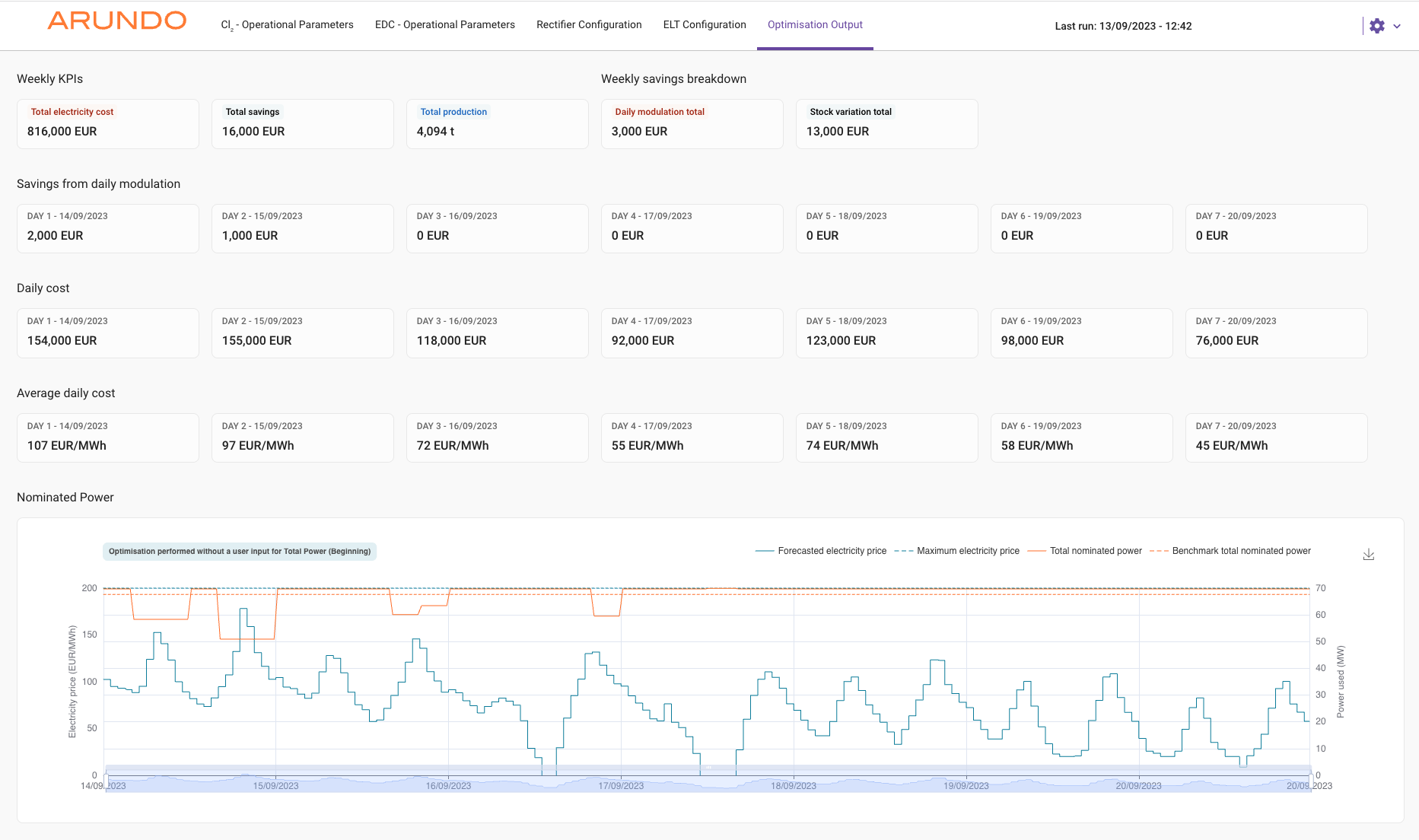
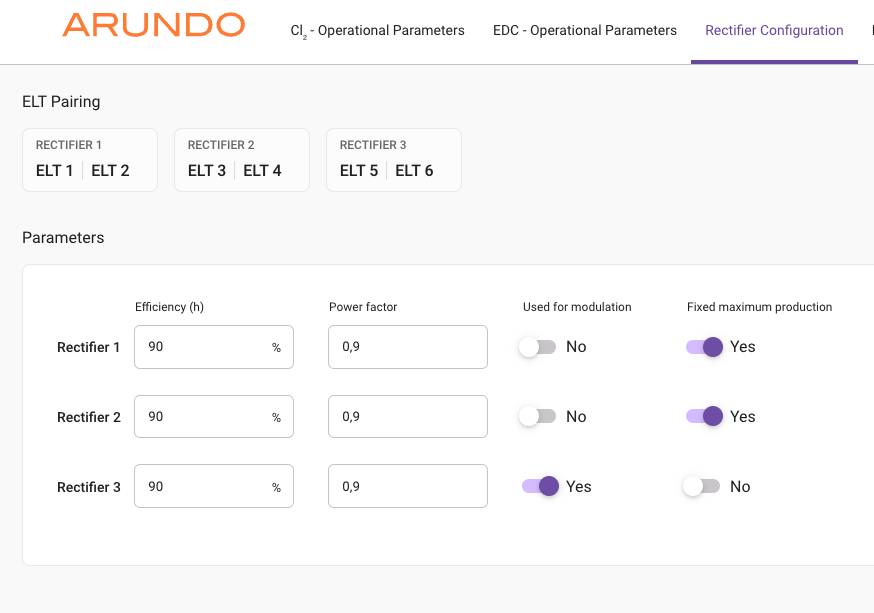
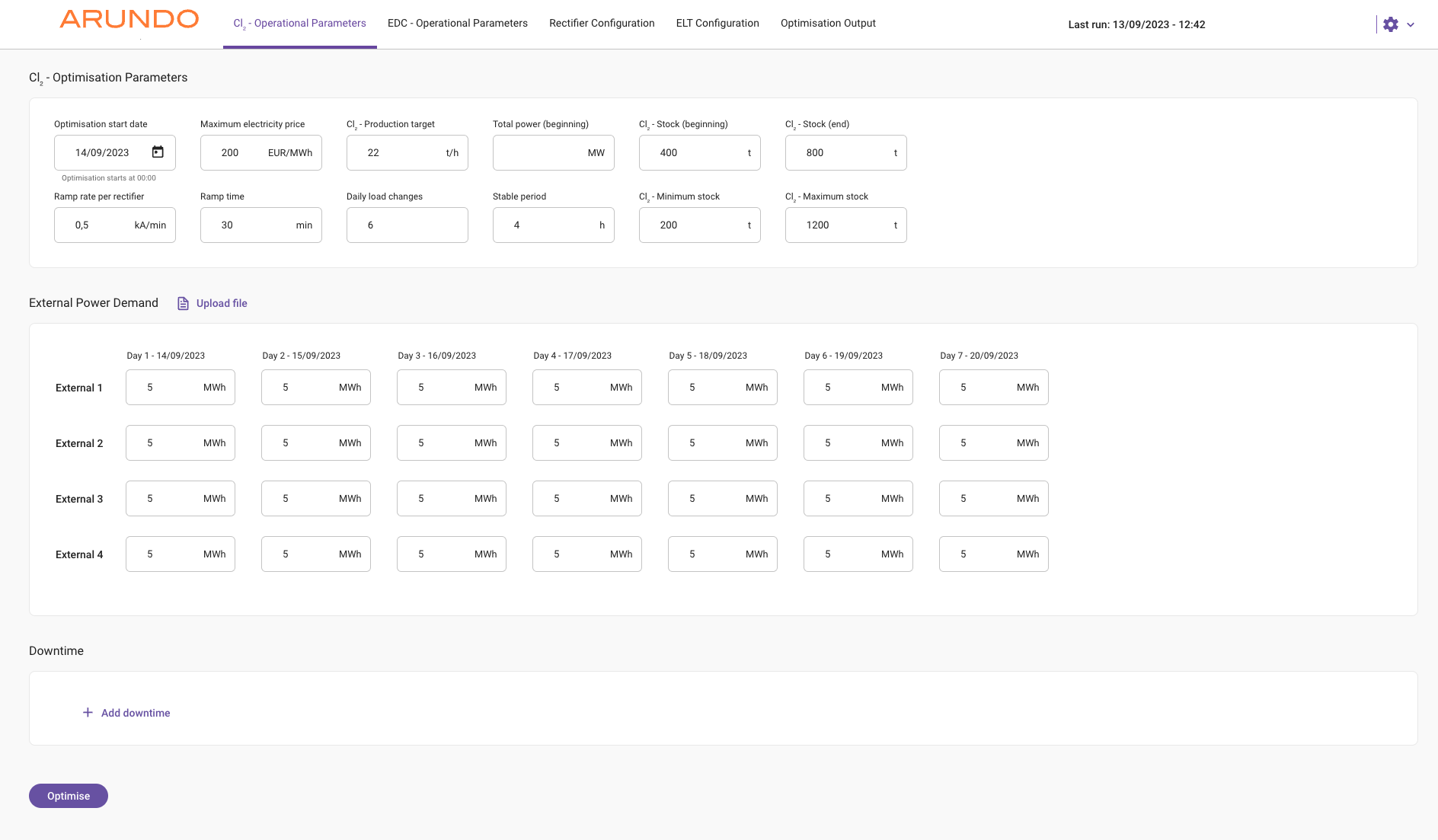
The Energy Optimizer combines two things: a machine-learning forecast of electricity spot prices, and mathematical optimization over your site's real constraints — production targets, rectifier configuration, ramp rates, minimum stable loads, contract terms. Every day it produces the load profile that meets your targets at the lowest cost (or the most profitable output when volume is flexible), and shows the planner exactly what it will save against a flat profile. Site constraints are configured, not coded, so the optimizer reflects how your plant actually runs.

Level 2 on The Six Levels of Autonomous Plant Operations (Arundo 2026): the plan is computed when your planners ask for it; they approve it before it runs.
What would it save you?
An indicative estimate from production capacity, material, and country — before anyone from Arundo is involved.
Indicative. Based on 2022 (aluminium) / 2023 (chlor-alkali) average spot prices per country and typical energy intensity per material. Actual savings depend on electricity contracts, modulation capacity, automation level, and site constraints.
Want the real number? Bring us your load profile and contract → Book a use-case workshop
Four returns from one load plan.
Lower cost.
The optimal power profile for tomorrow's prices — the target output at minimum cost, or maximum profit when output is flexible.
New revenue.
Sell-back clauses honored automatically: when the spot price beats your contract price, the plan sells power instead of consuming it.
Lower emissions.
Less consumption at peak demand, when fossil generation dominates the mix.
A steadier grid.
Lower peak-hour draw is a societal benefit — and increasingly a commercial one.
In practice, chlor-alkali plants in the European power market can realize annual savings in the double-digit millions of euros by modulating load with the Energy Optimizer; a running deployment is delivering €8M a year in lower cost of goods sold from production planned across sites and energy markets.
Where 15% is real — and where it isn't.
Savings scale with two things: how volatile your electricity prices are, and how much load your plant can actually move — which depends on production volume against capacity and on how automated the plant's controls are. A highly automated chlor-alkali site running below full capacity in a volatile market can save up to 15%. A site at full capacity with manual controls saves less, and we'll tell you so before you buy anything.